 Reviews



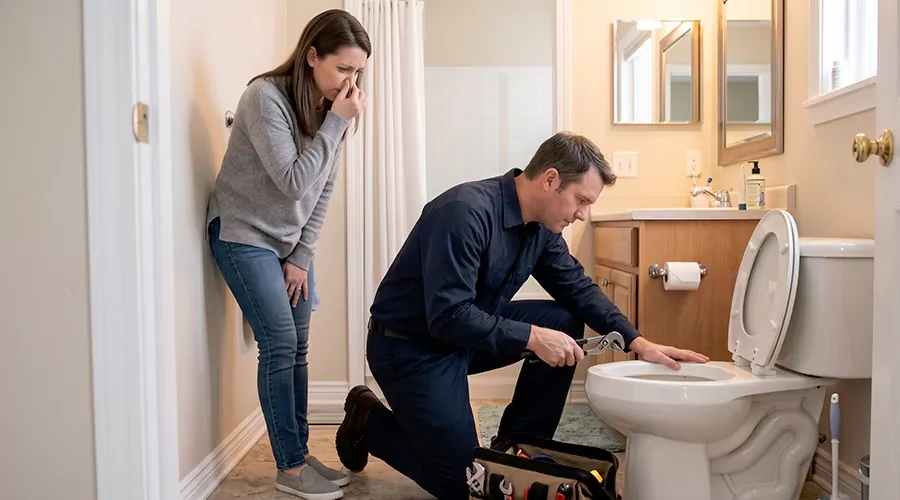
A toilet smells like sewage when sewer gases escape through a damaged floor seal or when nearby drains allow odors into the bathroom. A dry drain trap is another common cause. Some odors disappear after a few minutes of basic maintenance, while persistent smells can indicate damaged plumbing connections.
A properly functioning drainage system keeps sewer gases from entering living spaces. Water-filled traps block gas movement while sealed pipe connections prevent leakage around fixtures. When one of these barriers fails, unpleasant odors can spread through the bathroom even when the toilet flushes normally.
What Causes a Sewage Smell Around the Toilet?
A sewage smell usually develops when gases escape from the drainage system or organic material accumulates inside an accessible drain. Several plumbing problems can create similar odors. The location of the strongest smell and the timing of its appearance help identify the source.
Damaged Toilet Wax Ring
The wax ring creates a seal between the toilet outlet and the floor drain. If the toilet shifts or the seal deteriorates, sewer gases can escape around the base.
A damaged seal may produce odors without an obvious water leak. Small gaps can allow gas through even when wastewater hasn't reached the bathroom floor.
Dry Drain Traps
Bathroom sinks and showers use curved traps that retain water. This water forms a barrier between indoor air and gases inside the drainage system.
If a drain remains unused for several weeks, the trapped water can evaporate. Sewer odors may then enter the bathroom through the empty trap.
Blocked Plumbing Vent
Plumbing vents allow air to move through the drainage system while releasing gases outside the building. Leaves or other debris can obstruct exposed vent openings.
A ventilation restriction may create pressure changes that disturb water seals. Gurgling sounds from nearby drains can accompany this problem.
Clogged or Damaged Sewer Pipes
Accumulated waste can restrict drainage and contribute to foul odors. Damaged pipe connections may also allow sewer gas to escape into concealed spaces. Our clogged sewer line service addresses these blockages before they cause backups.
These problems become more concerning when several fixtures drain slowly or wastewater begins backing up.
Dirty Bathroom Drains
Hair and soap residue can trap organic material inside sink or shower drains. As that material decomposes, it can release unpleasant odors.
These smells sometimes resemble sewage even though the toilet connection is functioning correctly. Cleaning the affected drain may resolve the problem.
How Can You Identify Where the Sewage Smell Is Coming From?
The strongest odor often provides a useful clue about the source. A smell concentrated around the toilet base suggests a possible seal problem. An odor coming from an unused shower drain may indicate an evaporated water barrier. Comparing different areas helps prevent unnecessary toilet repairs.
| Where the smell is strongest | Possible cause | What to check |
|---|---|---|
| Around the toilet base | Damaged floor seal | Movement or moisture |
| Inside the shower | Dry drain trap | Recent water use |
| Beneath the sink | Trap or pipe connection | Visible fittings |
| Throughout the bathroom | Ventilation or shared drainage issue | Multiple fixtures |
| After flushing | Drain pressure problem | Gurgling sounds |
| During wastewater backups | Sewer restriction | Drainage performance |
| Near a floor drain | Empty trap | Standing trap water |
Notice whether the smell appears continuously or only after using water. An odor that becomes stronger after flushing may indicate pressure changes inside the drainage system.
A sewage smell that persists despite thorough surface cleaning is less likely to be caused by ordinary bathroom dirt.
What Warning Signs Suggest a Serious Sewer Odor Problem?
Persistent sewer odors deserve attention when they occur with unusual drainage behavior or visible moisture. A damaged floor seal can release gases before wastewater becomes noticeable. More extensive drainage problems may produce several symptoms across the house rather than affecting only one toilet.
Watch for these warning signs:
- A sewage smell persists for more than 24 hours.
- The odor becomes stronger immediately after flushing.
- Water appears around the toilet base.
- The toilet rocks when gently touched.
- Gurgling sounds occur inside nearby drains.
- The bowl water level changes unexpectedly.
- Several fixtures begin draining slowly.
- Wastewater returns through a shower drain.
- Sewage odors spread into adjoining rooms.
- Household members develop irritation or headaches alongside a strong odor.
A powerful rotten-egg odor isn't automatically sewer gas. Natural gas leaks can produce a similar smell because odorants are added to fuel gas. If you suspect a fuel gas leak, leave the building and contact the gas utility or emergency services from outside.
How Can You Find the Source of Sewer Smells Yourself?
A simple bathroom inspection can help determine whether the odor comes from an unused drain or a toilet connection. Start with observations that don't require dismantling plumbing. Avoid entering crawl spaces or enclosed areas where strong gases may have accumulated.
Step-by-Step Odor Inspection
- Open a window or use suitable bathroom ventilation.
- Check whether the toilet base is completely dry.
- Gently test whether the toilet moves.
- Inspect accessible sink drain connections.
- Run water into rarely used fixtures for 15 to 30 seconds.
- Check whether nearby drains make gurgling sounds.
- Recheck the bathroom after allowing fresh air to circulate.
If an unused drain was the cause, restoring its water seal should reduce the odor. A toilet that rocks or leaks requires a different approach because adding water to nearby traps won't repair its floor connection.
Do not pour bleach into several drains to disguise the smell. Fragrances and strong cleaning products cannot repair a broken drainage seal.
How Can You Remove a Sewage Smell From the Toilet?
Removing sewage odors requires correcting their source rather than covering them with air fresheners. Simple problems such as dry drain traps can be addressed with water. A damaged toilet seal or concealed pipe defect requires a different repair because the opening continues allowing gases into the room.
Restore Water in Unused Drains
Run water through bathroom fixtures that haven't been used recently. This refills the trap and restores the water barrier that prevents sewer gases from escaping.
For an infrequently used floor drain, adding water periodically can prevent evaporation. The appropriate frequency depends on indoor temperature and how quickly the trap dries.
Clean Accessible Drainage Openings
Remove visible debris from sink stoppers and shower drain covers. Clean the accessible surfaces using a suitable bathroom cleaning product.
Avoid mixing drain cleaners with bleach or acidic products. Chemical reactions can create hazardous fumes without removing the underlying source.
Check the Toilet's Stability
A toilet should remain firmly attached to its mounting flange. Movement can disturb the wax ring beneath the bowl.
Don't attempt to stop sewer odors by simply sealing the visible base with caulk. The underlying drainage connection must be sound before the outside perimeter is finished.
When Should You Call a Professional?
Professional assistance is appropriate when sewer odors persist after the drain traps are refilled or when the toilet's floor seal appears damaged. A plumber can inspect concealed connections and test the drainage system for faults. Multiple slow drains or wastewater backups require prompt assessment.
Seek help if the toilet leaks or rocks during use. Persistent odors around the base may require removing the fixture to inspect its flange and seal.
Sewer Odor Repair Costs in 2026
These are approximate U.S. repair estimates.
| Problem or repair | Estimated cost |
|---|---|
| Refilling a dry drain trap | $0 |
| Basic drain cleaning | 100–275 |
| Professional wax ring replacement | 150–300 |
| Toilet flange repair | 150–450 |
| Sewer camera inspection | 271–1,725 |
A simple dry trap requires little more than restoring its water level. Repairing a damaged floor connection costs more because the toilet generally needs to be removed and reseated.
How Can You Prevent Sewage Smells in the Bathroom?
Preventing sewer odors requires keeping drainage traps filled and protecting the seals around plumbing fixtures. Regular inspections help identify leaks or unusual movement before gases enter the room. Good ventilation can reduce lingering smells, but it doesn't replace proper drainage maintenance.
Follow this routine:
- Weekly: Run water through seldom-used bathroom fixtures.
- Monthly: Inspect the toilet base for moisture or movement.
- Every three months: Clean accessible sink and shower drains.
- Every six months: Check exposed drainage connections for leaks.
- After long absences: Refill drains that may have dried out.
Avoid flushing wipes or hygiene products because they can contribute to drainage restrictions. Keep floor drains accessible so their water seals can be checked when unusual odors develop.
Common Questions About a Toilet That Smells Like Sewage
Can a toilet smell like sewage without leaking water?
Yes. A damaged floor seal may allow sewer gases through without producing a visible puddle.
Why does my bathroom smell like sewage at night?
Pressure changes or unused drain traps can allow odors to become noticeable. The source still needs to be identified.
Can a blocked vent cause sewer smells?
Yes. A ventilation restriction can affect drainage pressure and disturb trap water seals.
Will pouring bleach into the toilet remove sewer odors?
Bleach may clean some surfaces but cannot repair leaking seals or damaged drainage pipes.
Is breathing sewer gas dangerous?
Sewer gases can contain harmful substances. Strong odors or symptoms such as dizziness require leaving the affected area and seeking appropriate assistance.